
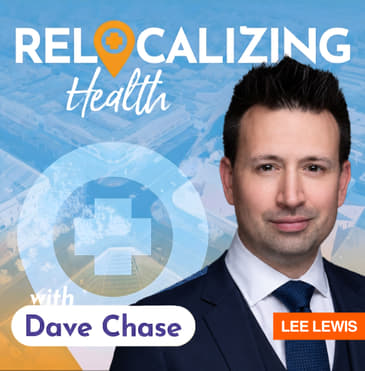
Welcome to Relocalizing Health, where we explore the transformative power of community-driven healthcare reforms. In today’s episode, guest Lee Lewis and host Dave Chase challenge long-held beliefs about healthcare being an uncontrollable cost and reveal how employers, by banding together in cooperatives, are not just cutting expenses but improving care quality and outcomes.
Drawing inspiration from the historic rise of rural electric cooperatives, Dave Chase introduces us to the Health Transformation Alliance, a pioneering employer-owned cooperative reshaping health benefits for millions. Lee Lewis, Chief Strategy Officer of the Health Transformation Alliance (HTA), shares behind-the-scenes stories and actionable insights on how organizations can pool resources, break industry dogmas, and unleash innovations that empower individuals and whole communities.
Tune in to hear inspiring case studies, practical strategies for change management, and a powerful call to action for every employer, community leader, and clinician ready to take back control of healthcare and make a real difference for the people they serve.
Timestamps:
00:00 Building a healthcare co-op
03:39 Saving for Employee Nursing Stations
08:35 Misconceptions about saving on healthcare
10:25 Identifying motivated benefits team members
15:23 Highlighting hospital cost and risk issues
19:03 Collaborating with local employers
20:42 Scaling innovation with initial partnerships
26:03 Improving patient care navigation
29:39 Improving employee benefits and savings
31:55 Economic impact of technology in workplaces
34:40 Healthcare crisis and hero benefits leaders
Turning the Healthcare Crisis Around: Lessons from Relocalizing Health
Healthcare costs in the United States continue to rise, burdening businesses, governments, and individuals alike. Yet, as explored in the recent Relocalizing Health podcast episode with Lee Lewis and Dave Chase, the belief that healthcare is a fixed and uncontrollable expense is a myth. This engaging discussion offers transformative ideas and practical strategies for employers and civic leaders seeking to both improve the quality of care and reduce costs. Read on to discover key takeaways, inspiring stories, and actionable recommendations straight from this insightful episode.
Dispelling Healthcare Myths: Costs Aren’t Set in Stone
One of the fundamental insights from this episode is the prevalence of three persistent myths about healthcare among business and government leaders. According to Lee Lewis, many believe that healthcare’s costs are “fixed” and cannot be controlled, that saving money on healthcare will automatically diminish care for employees, and that the hassle of trying to change these systems simply isn’t worth it.
Lee Lewis powerfully challenges these assumptions. He asserts there are proven strategies to both lower costs and improve healthcare outcomes. A key example he shares involves working with a major airline, where saving just a fraction of the millions spent annually could have easily funded meaningful employee benefits like nursing stations for new mothers. Unfortunately, many HR and benefit leaders assume such savings are unattainable, leaving tremendous value unrealized.
The Power of Cooperatives and Clean Incentives
The Health Transformation Alliance, detailed by Lee Lewis, functions as a cooperative fully owned by its member employers. This unique structure keeps incentives clean: no external profit motives, full transparency, and an unwavering focus on serving the employees of these companies. Members pool their buying power and data insights, helping each other innovate and negotiate better contracts, vendor relationships, and health plan strategies.
By collecting and redistributing best practices, proven negotiation approaches, and outcome-driven vendor strategies, the cooperative helps bridge the gap between seeing healthcare as an uncontrollable expense and treating it as a powerful lever for positive change.
Creating a Culture of Change: Mythbusting and Peer Support
Changing organizational behavior takes more than just new information. Dave Chase and Lee Lewis discuss how transformation begins with a willingness to push past industry dogmas and a commitment to engaging passionate changemakers within organizations.
Often, it’s about “change people or change people” as Lee Lewis says, meaning you need either curious, engaged staff ready to challenge norms or you need new team members who will. Connecting these changemakers with like-minded peers in other organizations can catalyze progress, helping them feel less isolated and more energized to drive innovation.
High-Quality Care Doesn’t Have to Cost More
Another crucial insight from the podcast is that better healthcare does not mean higher expenses. Many believe directing employees toward lower-cost care equals lower quality. In reality, Lee Lewis outlines that hospitals with better safety records and fewer complications actually help avoid unnecessary costs from errors, readmissions, and preventable health crises.
By educating benefit teams and leadership about the real risks of low-quality care, organizations can make smarter decisions that directly impact both employee well-being and the bottom line. Implementing primary care strategies, embracing nurse or digital navigation, and steering employees to centers of excellence can be significant difference-makers.
Tangible Results: Real Stories of Success
The episode features inspiring stories where organizations implemented these strategies and saw dramatic results. In one case, a merger between two companies with different healthcare cost structures resulted in an opportunity to save over $250 million thanks to more effective benefit management. In another, a Fortune 50 company flattened its healthcare trend over four years, adding a billion dollars to its earnings before interest, taxes, depreciation, and amortization (EBITDA) and even drawing CEO recognition on Wall Street calls.
Who Needs to Take Action?
Both Lee Lewis and Dave Chase emphasize that benefit directors and organizational executives are perfectly positioned to drive these changes. With the right knowledge, connections, and a sense of possibility, it’s realistic to flatten cost trends, improve outcomes, and restore healthcare’s value to employees and employers alike.
Final Thoughts
If you are a benefits leader, executive, or concerned public servant, this episode of Relocalizing Health is essential listening. The tools and playbook exist. By challenging outdated beliefs and working together, turning the healthcare crisis around is not just possible; it’s already happening for those bold enough to lead the way.
Learn More:
RosettaFest 2026 - https://rosettafest.org/
Health Rosetta - http://healthrosetta.org/
Nautilus - https://www.nautilushealth.org/
Kynexions - https://kynexions.com/
Dave Chase - https://www.linkedin.com/in/chasedave/
Podcast Website - https://relocalizinghealth.com/
[00:00:00] Before we start, I want to invite you to Rosetta Fest 2026 in Nashville. This is where employers, unions, and clinicians who are cutting healthcare costs 20-50% while improving care and outcomes share exactly how they did it. Operators learning from operators with patients at the table. Learn more and register at rosettafest.org. Now let's get into today's conversation.
[00:00:27] Leaders in business and government often believe that healthcare is a fixed cost and you can't do anything to change it. This is absolutely false. The second false belief is that saving money in healthcare hurts people, but that couldn't be further from the truth. You can absolutely save money on healthcare while significantly improving the quality and the outcomes that you get.
[00:00:46] There is a freaking healthcare crisis in this country and people and benefits get saddled with that when they're just showing up for work. Accepting the challenge of really flattening out that cost trend and finding innovation to come out of the market in order to make everything more affordable. If we could do that with enough companies for nine years, we could catch up to Switzerland in terms of cost. That's how we could turn the whole thing around.
[00:01:08] In 1935, most farms had no electricity.
[00:01:55] More than 900 electric cooperatives still power much of rural America. I think it hits like 80% of the counties, 56% of the landmass of the U.S. owned by the very people they serve. And so I want you to hold that picture because a version of that is happening in healthcare right now. My guest runs the strategy for a cooperative of some of the largest and most influential employers in the country. And together they're covering millions of individuals.
[00:02:22] And, you know, they decided to stop being just price takers and started being owners and really took ownership, pulled their buying power, and then the savings flow back into the members instead of off into the ether. So, you know, the question I want you to sit with today as a listener is if Jumbo employers can build a co-op this powerful, what happens when whole communities of employers build one?
[00:02:49] So, let's find out. My guest today is Lee Lewis. He's the chief strategy officer and general manager of medical solutions at the Health Transformation Alliance. It's a cooperative, as I mentioned, it's a cooperative, as I mentioned, of leading employers that pool their buying power, build better health plans at a lower cost.
[00:03:08] And before HTA, Lee had led the innovation practice inside of the one of the largest benefit firms where he spent years learning how employers actually buy healthcare and not just talk about it, but actually drive change. And he also hosts a great podcast I encourage you to listen to if you're interested in benefits called Broken Benefits. Lee thinks incentives, contracts, measurable outcomes, and he thinks a lot about those things.
[00:03:36] He's one of the most thoughtful, creative people in the industry, which is neat, as I'm going to stretch it to think beyond even the innovation he's driving today. So, Lee, welcome to Relocalizing Health. Oh, my pleasure. Thanks so much for having me. Absolutely. So, you know, as I mentioned, you've spent your career on the buy side of healthcare. Take me back, you know, was there a moment you realized that the way employers were buying health benefits was just fundamentally off and that they're going to have to fix it themselves rather than the fix come from outside of their efforts?
[00:04:06] My favorite story that illustrates the way that it was broken inside the employers and also the opportunity. I was doing consulting for a major airline and they, I asked them, what is it they wanted to do? If they could free up money because they were spending seven, eight hundred million dollars a year or more on healthcare. And I said, if you could save some money in that, what would you spend it on? They said, we want to have nursing stations for our staff so that they could, they could pump milk for their babies. And I said, OK, great. How much would that cost?
[00:04:35] And they said about five hundred thousand dollars. And we then went through a meeting where we showed them how to save fifty million dollars a year. And I said, we could take one percent of those savings from one year and build all these nursing stations that you could use nationwide. And they laughed and they said, Lee, if we save fifty million dollars, at best, we're going to get a high five because the way things are,
[00:05:02] it's not expected for us to save money because no one expects us to be able to say to be able to control health care. It's seen as a plug figure. And our job is to manage it, but not necessarily lead it or innovate within it. And so any of the innovation that we do, we're doing it because it's the right thing to do, but not because our employers are incentivizing us.
[00:05:22] That was like a great story to illustrate how even within organizations, oftentimes leaders don't believe that they can do anything with health care and they don't aspire for anything better. And that really leaves so many opportunities and so much talent just to die on the vine. Yeah, that's amazing. So for a listener who has never heard of the Health Transformation Alliance, can you explain it like you would to, you know, a civic leader, a mayor, superintendent? You know, what is it?
[00:05:52] Who owns it? You know, why? Why a cooperative and why it matters, not just a coalition, because there's been a number of coalitions around. Yeah. What's elegant about the cooperative is that it is fully owned by the members and we are, in a sense, a bit of an owned subsidiary. I don't know if legally that's the exact term, but we are owned by and fully possessed by these employers. We're not allowed to earn any money outside from outside entities beyond our owners.
[00:06:22] And written into the bylaws are that major carriers and consulting firms and the like who are in the industry are not allowed to be owners of the co-op. So it allows us to keep our incentives clean. And by doing that, by keeping clean incentives, having full transparency on how everything is getting paid, our profit, our salaries, everything is fully disclosed and transparent for our members.
[00:06:45] And the ability as an owned entity to be able to share strategy and be able to gain insights from accumulated data within our co-op. Those three things allow us to be able to offer something really unique back to our members. And in terms of kind of pulling that intelligence, how far does that go? You mentioned strategies. Are you able to, you know, pull data or contracts or any other things?
[00:07:10] Like what's sort of the capability there that you're able to tap into? Yeah. What's exciting? I joke that I'm like a broken Roomba of the industry where I sort of go around from employer to employer and I gather up all the best practices and learnings that I can. And then I go back around and redistribute everything that I picked up so that everyone has a chance to learn. This is exciting. So what does that include?
[00:07:36] That includes contracting strategies, negotiation strategies, best practices for which vendors and how to pair vendors together to get better results. It gets into the TPAs and carriers and how they're performing different areas and what is working in terms of carve outs and new and advanced strategies and different types of integrations. We learn about these things and then share with everyone.
[00:08:03] You spoke to, you know, your airline story and, you know, seeing the problems of one thing, you know, changing behavior is another. And, you know, maybe there's a postscript to that story or, you know, just give me some of the biggest lessons you've learned where, you know, people are set in a particular way. What have been the things that have allowed maybe a little bit of sclerosis to be shook and loose and, you know, actual change ended up happening?
[00:08:30] One thing that we look at if we're speaking to business leaders is we'll talk about kind of the three dogmas that people believe, even if they don't realize that they believe it. And it's real simple. It's one is leaders in business and government often believe that health care is a fixed cost and you can't do anything to change it. People are going to get cancer. They're going to break their leg. You can't do anything about that. And so why try? That's the first false belief. This is absolutely false.
[00:08:57] You can absolutely make changes that get you better outcomes and lower prices in health care. The second false belief is that saving money in health care hurts people because people think incorrectly, oh, my gosh, if I am saving money because it's a fixed thing, that means I'm either A, I'm either jacking up deductibles on families who can't afford it. That's no good. Or maybe B, I'm telling people they can't have their doctor anymore because I'm going to force them to go to a different doctor that's cheaper or whatever.
[00:09:24] Or third, maybe I am sending them to low quality care that's cheap and inexpensive. Right. And people feel these things. And so they don't want to talk about saving money on health care because it feels icky. But that couldn't be further from the truth. You can absolutely save money on health care while significantly improving, improving the quality and the outcomes that you get.
[00:09:48] And then the third false belief is, well, if number one and number two are true, then the juice is never worth the squeeze. That we shouldn't try anything at all because it's always going to be more disruptive than it's worth. And so people run away from it. So that's the first thing we do is we've got to get past those three dogmas and be able to educate internally. Like, no, we can get better outcomes, better health care, better results and a happier, more engaged workforce.
[00:10:16] And we can do all of that while lowering the cost and offering something that's going to be really cherished and valued. Yeah, maybe. I mean, you've nailed it. I mean, I definitely hear those dogmas or those myths. Maybe go through each of those and like what you found helps overcome those things. It's logical for people to think that. I mean, certainly, you know, it comes to spending dollars, you know, most areas of your life. You get to spend more on a car or a house. Generally, you get a better car or a house.
[00:10:44] It's paradoxical in health care that it's often the opposite. It's true. So what do you find is sort of the myth busters that are most effective? What we find is that it's a change people or a change people. So the first is what we'll do is we'll start working with the benefits team and start teaching some of these things. It starts with some new information where we will say, hey, did you know that there are a bunch of companies like yours who are flattening their health care cost trend or even going significantly negative?
[00:11:14] And they're not putting it on the backs of the families who work for them. And some people will immediately, their eyes will open up and they'll say, hey, I want to learn more. Some people, they hear that and they're like, I don't care. Like, I'm just here to collect a paycheck and I'm mailing it in. And if you've got somebody who just doesn't care, there's nothing you can do with that person. If that's the case, you need a new person. But if you have a person who lights up, who's a little bit curious, who wants to do the right thing, who takes their job seriously, that's gold. We can work with that.
[00:11:43] And then we educate that person. We teach them whatever it is that they can do. We give them all the strategies. We introduce them to other employers so they can develop a peer group who is also like them. Because a lot of times they'll go to, you know, a local health care thing or local, maybe a business meeting or the Chamber of Commerce or something. And everybody in the room believes the three dogmas. They're like, yeah, I can't do anything with health care. It's a plug figure or whatever. You're not going to do anything. And you feel like an outsider and a weirdo.
[00:12:09] But what we do is we try to get those people who are passionate and want something different. And we connect them with brilliant other people who are like-minded so that it can feed and they can learn from each other and they feed off each other's energy. And that allows that person to then act as an agent for change inside their organization. And if they're a senior person, they can inspire and bring the other staff members along with them. And that's managing down.
[00:12:34] And then they also manage up where they will go to their executives and say, hey, we want to try some new things. We know that this is really expensive. Everybody has a need to save money. And they anchor in on that. They say, look, I know that you want to save money. But I also know talking about health care, like we often just give health care a pass. So that's not an opportunity. I'm here to suggest that I've learned that this actually is maybe a huge opportunity. And I want to do our part. And here are some things that here's the number that we're shooting for.
[00:13:03] And here are the programs we need to put in place in order to get to that number. And there's going to be some change management that occurs. We'll use that word instead of disruption. It's going to be change management. And we will work through that. We're going to communicate this really well. But if we can follow this plan and it does like has happened with others, we're going to get ourselves to that number. And senior leadership, they like a good number and they like a good plan. And if you can deliver those two things to them, that allows you to manage up and get stuff done that you need to do. Yeah, no, that's great.
[00:13:32] I mean, I've really seen that, you know, the birds of a feather. That's what I call it. You know, somebody like you who's done it helps overcome that. And it's one of the reasons actually why Rosetta Fest, which is our annual gathering, there are, you know, gatherings of employers, obviously, going to particular events and HR events. But, you know, overwhelmingly, you know, the people there are in the old models.
[00:13:58] So when you come to an event, you know, like Rosetta Fest, you know, you've got a couple hundred people doing it like you. Then, you know, you start feeling less, you know, like a weirdo, as you said. And like, oh, my gosh, like this is the future. So that makes a big difference. And the other thing that I'm curious how you've seen this play out, but I've seen some advisors who've done really well on the change management side really lead with quality
[00:14:25] and kind of relates to, you know, one of the dogmas that, again, for that dynamic where people often think you're going to pay less, you're going to get some, you know, butcher shop or somebody is going to, you know, put leeches on you or whatever and not get the best health care when, in fact, the best health care is almost always less expensive. And so that's been a powerful thing. Have you seen that angle work very well with folks? And how do you go about, you know?
[00:14:59] If you've been listening and thinking, I wish there were more places where people share what actually works. That's exactly why we created Rosetta Fest. Join us in Nashville at the end of July. It's where employers, unions, and clinicians who've built thousands of health plan successes share how they improve the caregiver and patient experience that leads to the best health and financial outcomes. The only people on stage at Rosetta Fest have created sustained success and happily share their secrets.
[00:15:27] Details and tickets at rosettafest.org. All right. Back to the episode. Well, you need kind of a normal person who doesn't think about centers of excellence and misdiagnosis rates and, you know, preventable complications and all that type of thing. This works really well if we have a good mechanism to, you know, to teach about it or highlight it. There is a lot of talk about high quality, but it gets sometimes fuzzy about how to define it.
[00:15:56] And so when we're leading out with a new program, it's we want to educate about the problem of low quality, usually as a catalyst to get people to the opposite. Rather than just going and saying, hey, we need high quality because most people say, oh, well, my doctor is a good doctor. So that's high quality. Or I like the guy my neighbor uses. That's high quality. Or they have a nice building and a piano player. So that's high quality. And so you have to get people off the ephemeral of what is good.
[00:16:27] I've generally found that the best way to do that is to get to the opposite, and that is what is bad. And it is to help people understand that there are complication rates that are very high at some hospitals, that there are readmission rates that occur, that the cost in some places is causing people to have their wages garnished out from under our noses.
[00:16:49] It is learning that there are massive price fluctuations between hospitals that are all kind of seem like high quality places that you've heard of, but that there are huge price gaps between them. And if we can start to highlight that there are some dangers there that we've got to watch out for, which you can almost always do, look no further than your high cost claimants. And you've got a list of 10 people whose lives might have been ruined by crazy stuff happening in health care.
[00:17:19] You've got sepsis claims that are hundreds of thousands of dollars, families who are getting infected with stuff they did not bring with them into the hospital. These hop into your high cost claimants and jump right off the page. And your executives want to know that you know about those anyway. Like they want to know what, why is it that we just spent $600,000? That seems like a lot of money that's hurting our budget. What happened? And without violating any PHI or anything like that, you can explain the conditions that caused it.
[00:17:45] And often, often those high cost claimants are linked to errors, mistakes and complications. And it's like, hey, we want to keep people safe. We want to do the right thing. We want to keep them out of danger. And we definitely need to protect the assets that we've been given to steward appropriately. And so why don't we talk about safer, better, simpler, lower cost places where we can try to steer our people?
[00:18:12] And I found that that is often a good way to start bridging the gap to quality. Yeah, yeah. That's really a great point. And, you know, my new book's coming out in a few weeks. At the time, we're recording this. And, you know, in that book, I share, you know, my friend's story that was one of the, I guess you'd say, radicalizing moments, you know, for me, where she was one of the five, you know, not one of 500 or 5,000, like one of five who get the wrong cancer diagnosis.
[00:18:39] And had she gone to a center of excellence for a second opinion, almost for sure, she would have gotten the right diagnosis. And by the time they figured it out, you know, it was too late, right? It was game over for her, you know, ruined, you know, physically, financially, emotionally. And, you know, it's brutal to see. And literally just last weekend, you know, I was at a celebration of life for a college friend. You know, he was a great athlete, you know, and tennis player and, you know, had some back pain.
[00:19:08] And unfortunately, what happened to him happens to way too many people, you know, where he got a bunch of back surgeries and an X surgery. And if you delve into that realm, you know, 90% of those surgeries never should have happened. That's not the evidence that they're the most appropriate procedure. And, you know, the most predictive factor of you need back surgery is you've had back surgery. And unfortunately, that led to a horrible spiral for him.
[00:19:36] And, you know, I wrote this book on the opioid crisis and, you know, standard lower back pain. Like if we treat that right in this country and there's places we do, we would not have an opioid crisis. Like it's that direct and bad. So that's, those are powerful examples. You know, shifting gear a little bit to, you know, I think about you're managing a bunch of independent, powerful organizations and powerful people. I'm sure your contacts and, you know, they don't report to you.
[00:20:05] And, you know, frankly, that's not that much different than a group of smaller employers, you know, getting together. The model that I've been focused on a lot lately is how do you bring together in a particular locale a group of employers? Because obviously healthcare is quite local and word of mouth just works that much better there.
[00:20:27] You know, and so as you think about that dynamic and sort of how you've managed to get very disparate organizations, you share the strategies, you know, and not that everybody is doing exactly what you follow. But what do you, what have been some of the lessons of working across a bunch of different employers?
[00:20:46] How do you kind of focus your efforts so you're not just, you know, maybe back to just you're a consultant for a specific employer, but you're trying to do something that spans across multiple different organizations, multiple different challenges. What have been some of the lessons learned about how you manage in that environment? Yeah, there's a couple lessons that are important here. The first is that we can all think of big, bold visions of if 50 employers all did X, wouldn't it be great?
[00:21:16] We can all envision that. That's easy to envision that, but it doesn't occur in nature. It's like saying if every snowflake fell at the same time, it would make it easier to shovel our walks. Sure, it never happens like that. And so we have to lean into what's real and what we can do.
[00:21:31] And so the first is, is we dream of a bold vision and then we think, what is a version of that that would work for a single employer to where one employer could take a step in that direction and it would still be meaningful for the mission and it would still be meaningful for the employer to get a better result. And if we can scale a bold vision down to a single step, so to speak, with one employer, then we can find one employer to be the first one to do it.
[00:22:00] We can find the first snowflake to fall. And when you do that, you can get others and things will always follow an innovation diffusion curve. If your mission requires you to break nature and somehow get past that curve all at once, I don't see that be successful. Not very often. But if we can take something bold and start small, that's great. The second thing that that is critical is we lean into what the employer already wants to do.
[00:22:28] So if I have 10 employers who are all aligned to the mission and we want to get to a bold future in one area or another, the good news is, is there's so much that is challenging in American health care that there's 20 or 30 or 50 things that you can do that are all going to advance mission and make things better for your health plan, which is great. And large organizations, they're not going to be able to do all those things at once.
[00:22:50] So even within one organization who's very motivated, there's still a diffusion of innovation where you take steps and you don't do everything all at once. And what I found is it is much easier to lean into what an employer already wants to do and take steps in that direction than it is to try and convince them to go in some new direction so that it can be more convenient.
[00:23:12] And unfortunately, in that regard, if you have 10 employers who are all aligned to the same mission, you might be doing 10 different things in a given year, each of them following some different path that advances mission. But that's OK. And then the following year, they'll cross paths and they'll each do things that the others did the previous year as sort of the diffusion of new innovations occurs across multiple paths.
[00:23:38] That that's great insight. The one of the things I'm wondering about, you know, through this journey, you see so many different types of organizations and different starting points. Like you say, what would you say has been the biggest sort of unexpected, you know, truly surprising thing that you've observed, you know, in your years in this role? And tell us a little bit about that and what happened. And, you know, we'll follow up on that.
[00:24:05] Yeah. My my favorite story of something that just caught me totally off guard but was inspiring was a an Uber ride that I was taken in a few years ago. I was going to do some consulting at at Google and I was fidgeting in the backseat of my Uber. We were in California traffic and I was excited to get in to meet this employer. And I wasn't you know, I was sort of practicing or going through what I was going to say. And the driver saw what I was doing and said, hey, you know, what do you do?
[00:24:33] And I told her and she said, oh, I love my health care so much. I'll never leave my employer. And I'm like, this is crazy. I'm like, you're driving Uber. She said, yeah, yeah, it's it's spring break. I just drive Uber during spring break to earn some extra cash. I'm a school bus driver. And so immediately, what do we know? We know that this person is willing to use their vacation time to drive Uber in order to supplement the money that they're receiving in order to continue in that job. But what was holding them there was the value of the health care that they were receiving.
[00:25:01] And that was like an amazing immediate lesson. And I leaned in and I said, I have never heard this in the wild. Tell me, tell me what you love about the health care. And she said, if anything goes wrong, I know exactly where to go. Notice she didn't say I can go to any doctor I want. She said, I know where to go. She said, I know my doctor and he knows me and he knows my two boys. So there's a relationship of trust. And then the third thing she said, oh, and if something goes really badly, I know that my doctor will know how to help me get to the right place to take care of me.
[00:25:30] So downstream trust as well. And then finally, she said, and it's affordable. I know how much it costs and I can afford going to see him. It doesn't cost me too much. And that was it. She said just having that was enough to keep her in a job where she had to work over her vacation time for Uber in order to supplement having that job, which shows you the power of offering great benefits. Many people just think, oh, well, we offer benefits as a box check or as a it's sort of a retentive thing.
[00:25:56] We just want to stay in the herd and keep it normal because no one has a vision that it can be great. But if you deliver amazing benefits to your staff, it can be one of the most differentiating things you can possibly offer in your organization because nobody in health care has something that they love. You know, unfortunately, not everybody has that type of relationship with a doc and that they will guide them in that way.
[00:26:19] And so one of the things that I've seen kind of similarly, you know, drive people to where they're like, you know, in fact, another kind of school related story where, you know, is a school district where they were in a lower income area. And so they were recruited away by, you know, a richer suburban school district.
[00:26:39] And they actually ended up doing a round trip because even though they were paid more in terms of their W-2, it ended up being, you know, net less. Plus, they were kind of wild. And they really spoke to the power of the nurse navigation they had because they were in a medical desert. There really were no independent primary care there.
[00:27:00] Have you, you know, with the organizations you've worked with, have you seen that kind of, you know, maybe nurse navigation, maybe another type of navigation make a difference for individuals or an organization? Yes. We want to wrap every patient with the resource that we can. Sort of the three layers are, can we get telephonic navigation where you have people who are educated and know the system can help you navigate it? Second is sort of technology-based navigation.
[00:27:26] If you can get a good app that helps people to navigate the array of benefits and find doctors, good quality doctors. We want to make it as easily, we want to make it easy and affordable for people to do the right thing. And then the third is, and this forgives a thousand sins. If you can help your staff develop a relationship of trust with an affordable, accessible doctor so they can have like a family doctor or their doctor.
[00:27:53] Now, in some areas, this is not easy to achieve, right, with care deserts and things like that. Nevertheless, there is a paradox of primary care nationally where the doctors who are taking insurance oftentimes are not taking new patients. And the doctors who are taking patients are not taking insurance. And so what we advocate in strongest possible terms is that you must get a primary care strategy in place. So if you're in a care desert, look to see if there's direct primary care in the area. There often is.
[00:28:22] And if there is, jump on it. Call shotgun. The music is still playing. If they're taking patients, you want all the spots. And grab those for your organization so that your people can lock down the access that's available. Not to be not thinking in abundance terms, but there's a shortage of these doctors. So, you know, I'm calling it right now. Get shotgun on all their empty space right now for your organization. It'll serve you so well.
[00:28:47] But that'll allow you to help these people to have a relationship of trust with an affordable, accessible doctor. And then if there isn't any of that, or if you've exhausted the capacity there, then you can look at a virtual overlay as well. There's lots of great, credible virtual providers where you can get a doctor who may not live in your area and can still offer unbelievable care and advice and service, etc. And can help navigate you where you need to go if you need to see somebody in person.
[00:29:13] And if you do those three things, like you're 95% there. Like wrap your people up and help them to get to the right care at the right time, at the right place, at the right price. In a given organization, you may want it. You may have people who prefer any one of those three, you know, where some people just want the more tech forward. And, you know, maybe their health needs aren't that complicated. And other people, you know, they're in a chronic disease situation or they're, you know, navigating cancer. They really do need those folks.
[00:29:43] And, you know, I'm not one who, you know, is dogmatic about like there's only one way, you know, because a lot of the times what's appropriate for one individual isn't for another. So it makes perfect sense there. You're always full of some great stories. Any other stories as, you know, we've been talking here that sort of run through your brain of like, boy, if people knew this story, you know, it would sort of, you know, unstick them from maybe old dogmas.
[00:30:12] One that helps for private employers, I guess, that that is encouraging if you're looking at, OK, what's the financial case for doing any of this? We had one we had one employer who was managing their health plan really well. They merged with another employer. The other employer had just under three thousand dollars of difference in what their costs were. So I think one was at eighteen thousand per household and the other was at fifteen. OK. And but the fifteen thousand per household was better benefits.
[00:30:42] It was slightly better benefits, lower deductible and about the same premium. It was slightly better than the eighteen thousand. And they did this acquisition and they brought over over twenty three hundred employees from the eighteen thousand to the fifteen while improving the benefits. It was great. That just shy of three thousand dollars multiplied across twenty three hundred employees multiplied across a forty price to earnings ratio was two hundred and fifty million dollars.
[00:31:09] Opportunity that nobody had thought of that nobody had factored into the calculation that it was just a gift. It was a quarter billion dollar gift because that benefits executive was doing the right thing and had created an environment where they could do an acquisition and capture that arbitrage of three thousand dollars per employee. It was outstanding. Another one of our companies was able to manage their trend really well. And they went five years with flat trend without, you know, without making benefits worse.
[00:31:36] They made benefits slightly better every year and they went five years without having to increase any of the budgets. And it was able to they were able to avoid over two thousand layoffs as a result of that over the course of five years. And the executives brought that up as like, this is why we've been able to do it, because we we've just received this magical gift of we're the only employer doesn't have ten percent cost trend. And so because of that, we've been able to hire. We've been able to train and better make our people equipped to do things.
[00:32:02] It was an unbelievable cost and strategy advantage that accrued to just that company that we have. Another one is a fortune is a fortune 50 employer. They were able to flatten trend for four years. And by the fourth year, the accumulated value was over a billion dollars of EBITDA. And by the fourth year in earnings calls to Wall Street, the CEO was bringing up the work that the benefits team was doing in their recurring regular talks out to the entire market.
[00:32:30] The CEO was bragging about the work that the benefits team was doing. Wouldn't that be amazing if every benefits team in the country, whether in private sector or public, was taking that much of their their job that seriously and was accepting the challenge of really flattening out that cost trend and finding innovation to come out of the market in order to make everything more affordable. If we could do that with enough companies for nine years, we could catch up to Switzerland in terms of cost, which is like, Lee, well, that sounds really, really hard to do.
[00:32:59] Yes, I'm not saying it's easy, but like that's how that's how we could turn the whole thing around. You know, you can look at it just from the dollars and cents standpoint, but you can look at it the human impact standpoint. And you think about things that we kind of take for granted, you know, whether it's people using smartphones in the workplace these days, AI and just how quickly that happens. And, you know, there's no reason why it can't happen. And you've seen it. Right. And you see that kind of impact.
[00:33:27] And I remember I wrote a piece about a decade ago in Forbes and said, like, if every employer was doing what these folks were doing that I was writing about, it would be a five at that time. Probably more now would be a five hundred billion dollar recurring economic stimulus and remind people, you know, from the lowest productivity, you know, part of the economy. Health care like operationally hasn't had productivity gains.
[00:33:55] But, you know, zoom out like what is the most unproductive member of our economy? You know, somebody who's sitting in a hospital bed. Right. We want them to flourish and and be out there, whether it's, you know, with their kids or at their job. And, you know, that is such a counterpoint to sadly, you know, a lot of companies, you know, you go back 20, 30 years.
[00:34:19] A major reason I'd argue the biggest reason why jobs moved offshore out of our manufacturing base was there were headlines at that time. You know, every GM car had a two thousand dollar premium because of their health care costs. Well, you know, if they had tackled the root cause, you know, like the folks you're mentioning, we would have been able to avoid a lot of that that misery. And the fact that, you know, decades of wage gains have been stolen by all the care system that's not been delivering the results it can.
[00:34:49] And when it does, it's amazing. Right. You see it. We see it. You know, we have all the great nurses and doctors that we need. So, you know, it seems like this is really about how do we spread the word? And, you know, so I want to, you know, the last question for you is when you think about how you spread the the playbook, you know, we're not really selling a product here. You know, if yours are summing up, who do you think needs to hear this message the most?
[00:35:17] And what would be where you'd lead in terms of sharing that story with them? I go between benefits directors just and leaders at different organizations. They have their hands on the steering wheel and they're in a position to do big, bold things. And it's a hard it's a hard job.
[00:35:37] Like there's not there's not a marketing crisis in America that people in the marketing departments have to tackle or a janitorial crisis in America that people in operations and facilities have to tackle. But there is a freaking health care crisis in this country and people in benefits get saddled with that when they're just showing up for work out of HR to, you know, try and make sure that we're staying compliant with stuff. They didn't ask to have that burden placed on them, but they're the ones in the best position to quickly take action.
[00:36:05] And so I love the leaders and benefits who, whether their organizations are totally engaged and supportive of what they're doing and they're doing the right thing or even more so, sometimes the organization isn't totally bought into it, but the benefits leader is still doing the right thing. Those people are absolute heroes and we are so lucky for them out in society and we need more of them. The second I mentioned was a bit of a tie.
[00:36:29] The second one is executives who are in a position to empower those people to do the right thing. It's that oftentimes executives are their greatest obstacle. The example, one of one of our directors was a CHRO at a major retailer. And he and for 20 years, he said, I just he said, I believed all these things. I believe that we couldn't do anything with health care. That was an unmanageable, unrideable bull.
[00:36:54] And so we put people in that department just to manage the vendors and their job was just to keep it compliant. And he said we had two rules. It was keep us in the herd and keep it quiet. That's it. And he had a change of heart when he realized how wrong those those opinions were. And he helped to found the HTA in order to do things. And I do believe that if people learn these truths at senior levels of the organization, you can then provide the vision to your benefits teams to encourage them to do it and give them a chance to change, change people.
[00:37:24] Yeah, no, I love that. You know, and I really encourage people to follow Lee's work. I mentioned his podcast, Broken Benefits. He's a pretty prolific speaker, so you might be able to hear him speak as well. So, Lee, thanks very much. I really enjoyed your comments. And, you know, here's some of the things I'm taking from this. You know, cooperatives aren't a charity. It's not theory. You know, it's the oldest economic model in the U.S.
[00:37:50] You know, Ben Franklin set up one of the first ones, you know, well before the country was founded. And, you know, you don't have to wait around or build a loan. You know, the rural cooperatives proved it with power lines. Lee and his members at HTA are proving it with health plans. And the invitations on the table for every mayor, every employer, every union leader, every clinician, you know, who's listening to this. The tools exist. The playbook is being written out in the open.
[00:38:18] You don't need permission from anyone to start. You know, we have a site, NautilusHealth.org, where a lot of this has been open sourced. And if you do want to go deeper, my book, Relocalizing Health, with the subtitle Taking Back Healthcare, Rebuilding Communities Out this summer. And the whole movement gathers every year in the July-August timeframe, 2026. It's at in Nashville at the end of July. So, you know, come find your people.
[00:38:46] And until next time, this is Relocalizing Health.